
Lower Garden District, Where the Greek Revival Mansions Face a Public Park and Nobody Rushes to Explain the Difference From the Garden District
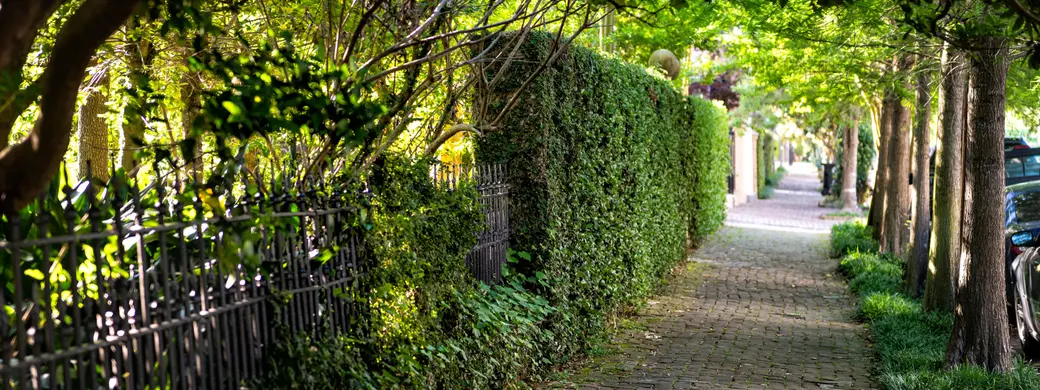
Two Names, One Confused Buyer
Every few weeks a client tells me they're looking at the Garden District, and when I ask a follow-up question or two, it turns out the listing they've been staring at is actually a few blocks south, in the Lower Garden District. It's an easy mix-up. The names are nearly identical, the housing stock rhymes, and most out-of-town buyers assume "lower" is just a modifier, like a sub-neighborhood of the main event. It isn't. The Lower Garden District is its own historic district with its own boundaries, its own development history, and its own personality, and if you're searching listings by neighborhood name, that distinction actually matters.
Roughly speaking, the Lower Garden District runs from St. Charles Avenue down to the river, bounded by Jackson Avenue on the uptown side and the Pontchartrain Expressway on the downtown side. The Garden District proper sits just upriver of Jackson Avenue. That expressway boundary is a clue to the bigger story: the Lower Garden District was laid out earlier, as part of the old City of Lafayette, before it was ever annexed into New Orleans. It grew up first, got its grid and its green space first, and only later did the neighborhoods upriver develop the plantation-lot mansions that people now picture when they hear "Garden District." Knowing which side of Jackson Avenue you're looking at will save you from falling for a house because of a neighborhood name that doesn't actually apply to it.
Coliseum Square Is the Neighborhood's Living Room
If the Lower Garden District has a heart, it's Coliseum Square. This isn't a manicured pocket park bolted on as an afterthought. It was laid out in the early 1800s as the literal town square of the City of Lafayette, back when this stretch of riverfront was its own municipality with its own ambitions of grandeur. The name itself was aspirational, a nod to plans for a grand public building that never quite materialized the way its namers hoped, but the square did its job anyway. It anchored the neighborhood, gave the surrounding streets their orientation, and gave the earliest homebuilders here a reason to build their finest work facing the park rather than tucked away from it.
That history is still legible today. The homes ringing Coliseum Square set the architectural tone for the streets that spread out from it, and walking the perimeter still feels like touring a 19th-century sampler of what wealth and civic pride looked like when they had a park to perform for. It's a rare thing in a modern city, a public green space that's also a working architectural museum, and it's why so many buyers who come here for a house end up staying for the park.
The Architecture Lesson Nobody Assigned
New Orleans real estate conversations tend to default to shotguns and camelbacks, and for good reason, they're everywhere and they're wonderful. But the Lower Garden District runs a different architectural program. This is Greek Revival territory, full-height columns, pediments, formal symmetry, houses built to look substantial from the street because they were built by people who wanted to look substantial. Alongside them sit the double-galleried townhouses, tall and narrow, with stacked porches that let a builder put grandeur on a lot that a shotgun would have handled far more modestly.
You don't need to be house hunting to appreciate the difference. A shotgun is designed for airflow and economy, one room after another, no wasted hallway. A Greek Revival mansion is designed to announce itself. The scale is different, the formality is different, and the intent is different. Shotguns and camelbacks were, generally, working houses for working families. The homes around Coliseum Square were built by people who had the run of a lot and chose to spend it on presence. If you like old houses simply because old houses are interesting, the Lower Garden District is one of the more rewarding places in the city to just walk and look.
Why the Artists Ended Up Here First
Long before "Lower Garden District" carried any real estate cachet, it carried a different kind of reputation: affordable, a little rough around the edges, and full of exactly the kind of grand, underpriced housing stock that gallery owners, theatre people, and working artists could actually afford. That history didn't evaporate once the money arrived. It settled in next to it. You'll find serious, restored money on the same blocks as artist-run studios and independent galleries, and neither side pretends the other isn't there. That coexistence is part of what gives the neighborhood its texture, it reads less like old money protecting its borders and more like a place that got interesting because creative people needed cheap square footage and grand bones, and then never entirely left once it stopped being cheap.
What It Actually Costs to Live Here
I'll give you the honest, unglamorous version rather than a number I made up to sound authoritative. The Lower Garden District generally runs a shade under the Garden District proper, which tracks with its history as the more accessible, more mixed cousin rather than the plantation-lot showcase upriver. That said, "a shade under the Garden District" still means grand homes here regularly clear seven figures, particularly the larger Greek Revival properties and anything with real proximity to the square.
Where an advisor actually earns their keep in this neighborhood isn't in reciting a median price, it's in knowing which blocks carry a premium for the park view or the pedigree, and which structural details in a 170-year-old house are cosmetic versus the kind that turn a charming fixer into a decade of unplanned repairs. Old houses hide their problems well. That's true everywhere, but it's especially true in a neighborhood built on this much brick, plaster, and ambition.
If You're Moving From Out of State
A quick, honest aside for anyone relocating from a city with basements and forced-air everything: New Orleans housing plays by different rules, and the Lower Garden District's older stock is a good place to take those rules seriously. Expect raised foundations instead of basements, wiring and plumbing systems that may reflect decades of piecemeal updates rather than one clean modern build-out, and flood zone considerations that simply don't factor into a home search in Seattle, Chicago, or Atlanta. None of that should scare you off a great house. It should just mean you bring a local inspection team, not a generalist, because the failure points in a 19th-century raised Greek Revival are not the failure points your last home inspector was trained to look for.
If you want to see what's actually on the market right now in the Lower Garden District, or you want a second opinion on a Greek Revival fixer before you fall in love with it, reach out through the Work with Me link below. No hard sell, just a local read before you commit.
Richard W. Hébert
Engel & Völkers New Orleans
Real Estate Advisor
(504) 617-5184
Richard.Hebert@evrealestate.com
RichardHebertRealtor.com
Licensed in Louisiana
Categories
Recent Posts

Fall for the House, But Get the Insurance Quote First

New Orleans Elevation Certificate: What It Really Means for Your Flood Insurance and Your Sale
Lake Vista, the New Orleans Neighborhood That Traded Wrought Iron for Walls of Glass
Why Your New Orleans Property Tax Bill Won't Look Like Your Old One (And That's Good News)

The House With a Hump Out Back: Uptown's Camelback Comeback
Garden District Homes for Sale: What $1M–$1.5M Actually Buys You in New Orleans
Bayou St. John Is New Orleans' Other Waterfront (And It Has Better Porches)
Buying a House in New Orleans During Hurricane Season: What Relocating Buyers Need to Know

Stories That Linger: The Myths, Monsters, and Tales of New Orleans