Bayou St. John Is New Orleans' Other Waterfront (And It Has Better Porches)

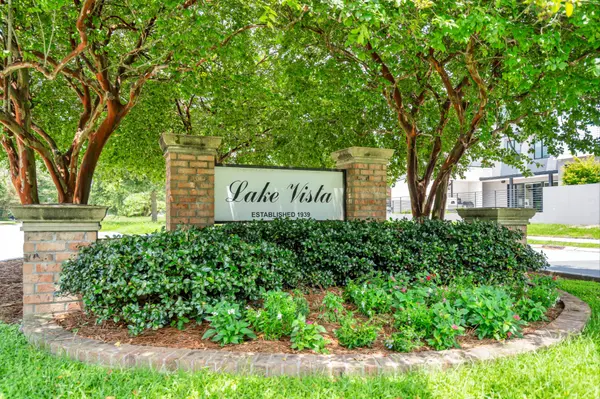
When people picture "waterfront" in New Orleans, they usually mean Lakeview or Lake Vista, the two neighborhoods that actually front Lake Pontchartrain. Lakeview rebuilt after the 17th Street Canal levee breach in 2005 into a neighborhood of larger, more upscale homes than what stood there before. Lake Vista, built on higher ground, largely escaped the Katrina flooding and is prized today for its mid-century modernist architecture. Both are legitimate, appealing versions of lakefront living, and if that's what you're after, they deserve a serious look.
But about two miles up Esplanade Avenue from the French Quarter, there's a different kind of water living altogether: an actual bayou, with a walking and paddling culture built up around its banks over more than a century. Bayou St. John isn't a substitute for the lake, and it isn't trying to be. It's a second option that relocating buyers doing real neighborhood comparison research rarely hear about until they're already deep into a search, and it's worth knowing about earlier than that.
The Architecture Nobody Warned You About
Bayou St. John and the adjoining Esplanade Ridge amount to a working museum of New Orleans residential architecture, and not the kind most newcomers expect. The dominant forms here are Creole cottages and raised cottages, the latter built with a center hall, a front gallery, and the main living floor lifted several feet off the ground, a practical response to the water table that the Pitot House, standing along the bayou since the 1790s, still demonstrates. Mixed in among them are Arts and Crafts bungalows and Victorian-era homes, especially along Moss Street and up through the Ridge, giving the area a more varied, less uniform streetscape than a lot of visitors expect from this city.
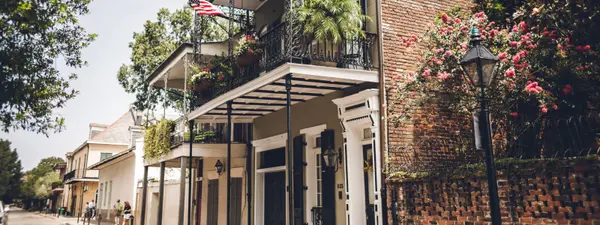
That's a real departure from the look most people associate with a historic New Orleans home. The double-gallery houses, with their two-story columned porches, built roughly between 1820 and 1850, are concentrated Uptown, in the Garden District, and along Esplanade Avenue itself. Those are grand, formal houses, and they photograph beautifully, but they aren't the only version of "historic" this city has to offer.
Bayou St. John's housing stock runs smaller in places, older in some cases, and more architecturally mixed block to block, which is exactly what draws buyers who want character without wanting a house that looks like everyone else's on the street.
Life on the Water, Actually Lived
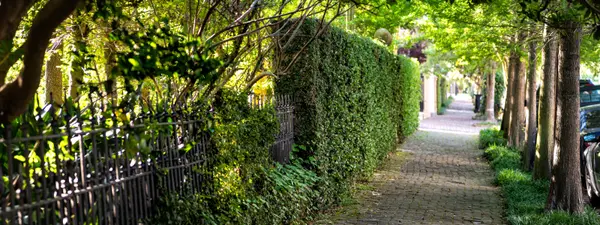
The bayou isn't scenery here so much as infrastructure. People paddle it. Kayaks and paddleboards go in and out most weekends, and the water is genuinely part of how residents spend a Saturday, not just something to look at from a porch. Moss Street runs along the water's edge, and the stretch between Esplanade Avenue and Lafitte Avenue has a public promenade that functions as the neighborhood's default gathering spot: dog walkers, joggers, people who just came outside to sit for a while.
The location does a lot of the work, too. City Park sits right at the neighborhood's edge, which means the botanical garden, the sculpture garden, and hundreds of acres of live oaks are a walk or a short bike ride away rather than a destination you have to plan for. The Fair Grounds, home to Jazz Fest and horse racing, sits about two miles from the French Quarter in the neighboring Mid-City area, close enough that it's part of the neighborhood's rhythm rather than an occasional outing.
None of this is dramatic, and that's sort of the point. It's a neighborhood built around a slower, more physical relationship with water than a lakefront view from a picture window.
Who Actually Buys Here
The buyers who end up here tend to fit a specific profile: entrepreneurs, doctors, and creatives leaving denser or pricier cities who want a house with genuine character and a neighborhood they can walk in, without trading away easy access to the Quarter or Mid-City's restaurant scene to get it. Many are people who've already ruled out the suburbs and are weighing Bayou St. John against Uptown and the lakefront neighborhoods, balancing architecture and walkability against square footage and predictability.
It's also a neighborhood that tends to appeal to people who'd rather restore something with real bones than buy new construction, even if that means a longer runway before the house looks the way they picture it.
What It Actually Costs
Pricing here is genuinely a range rather than a single number. Depending on the source and the specific mix of properties being measured, typical home values in the area run roughly $430,000 to $525,000. That range covers a lot of ground: smaller cottages in need of work sit toward the lower end, while well-restored historic homes, particularly the larger raised cottages and Ridge properties, can push past $1 million and, at the top end, toward $1.6 million.
If you're comparing notes across listing sites, don't be surprised if the numbers don't line up exactly. The spread is real, and it's driven mostly by how much restoration work has already gone into a given house rather than by size alone.
Making the Move
If Bayou St. John is on your shortlist, the practical process looks a lot like comparing any two or three New Orleans neighborhoods against each other: figuring out which architectural style you actually want to live in day to day, how much restoration work you're willing to take on versus buy already finished, and how much walkability matters relative to house size.
Because inventory here is smaller and more varied than in bigger neighborhoods like Uptown or Lakeview, a serious search usually means getting comfortable with specific streets and blocks early, rather than waiting for a wide pool of near-identical listings to compare side by side. That's a different rhythm than house-hunting in a subdivision, and it's worth knowing going in.
None of this is an argument that Bayou St. John beats the lakefront or Uptown. It's a different kind of New Orleans, and whether it fits your search depends on things that are personal to you: how you feel about older housing stock, how much you value being able to walk to the water, how close you want to be to the Quarter. I've spent a lot of time in this specific pocket of historic homes and know its housing stock, block by block, well enough to talk through where it does and doesn't make sense for what you're looking for. If you want to think out loud about Bayou St. John versus the lakefront, Uptown, or the Garden District, I'm happy to have that conversation.
Categories
Recent Posts