Pritchard Hill: Napa Valley’s Quiet Apex
Pritchard Hill has become one of Napa Valley’s most coveted wine regions, known for its rugged terrain, world-class Cabernet Sauvignon, and limited estate opportunities. Explore the story behind this iconic hillside landscape and how estates like Gandona embody the artistry, exclusivity, and enduring appeal of Napa Valley real estate.

To understand Napa Valley, it helps to gain a little perspective. As the land rises and the landscape grows more rugged, Pritchard Hill comes into view, not all at once, but gradually.
It does not reveal itself easily.
Rising above the eastern side of the valley, off the beaten road and beyond the polished corridors of Rutherford and Oakville, Pritchard Hill feels deliberately removed. The roads narrow, the turns sharpen, and the landscape begins to shift. Vineyards give way to forest, forest gives way to rock, and gradually the valley floor disappears behind you. What replaces it is something more elemental.
Pritchard Hill is not an official appellation. It has no formal boundaries recognized by the federal government. And yet, within Napa Valley, its identity is unmistakable. It exists more as a shared understanding than a defined place. A collection of elevations, exposures, and soils that together produce wines of spectacular character.
Its reputation today is built on Cabernet Sauvignon, but the story begins with the land itself.
A Landscape Defined by Restraint
The terrain here is unforgiving. Steep slopes, fractured volcanic rock, and thin, well-draining soils create an environment where nothing comes easily. Vines planted on Pritchard Hill do not grow with the vigor seen on the valley floor. Most struggle, and in that struggle, they produce fruit of intensity and concentration.
Elevation plays an equally important role. Many vineyard sites sit between 1,000 and 1,800 feet above sea level, placing them above the fog line that often blankets Napa Valley in the mornings. With more consistent sunlight and cooler nighttime temperatures, the growing season stretches longer, allowing grapes to develop slowly and evenly.
The result is a style of wine that is often described as powerful, but power here is layered. Structure, tannin, and depth are balanced by freshness and nuance. These are wines built not for immediacy, but for time.
It is a landscape that demands patience.
The Early Visionaries
For much of Napa’s modern history, Pritchard Hill remained on the periphery. The hill was named after homesteader Charles Pritchard who worked the land in the 1890s. (WineEnthusiast.com, Pinning Down Pritchard Hill). While the valley floor became synonymous with world-class wine in the latter half of the 20th century, the hills above were considered too remote, too difficult, and too unpredictable to develop at scale.
That perception began to shift in the 1960s and 1970s, when a small number of vintners saw potential where others saw limitation.
Pioneering estates like Chappellet were among the first to plant vineyards high on these slopes, betting that elevation and adversity could yield something unique. Over time, others followed. Bryant, Colgin, Ovid, and a handful of equally meticulous producers helped define what Pritchard Hill would become.
What emerged was not a region built on expansion, but on selectivity.
Unlike other parts of Napa Valley, where vineyard acreage has steadily increased, Pritchard Hill has remained intentionally limited. Much of the land is still forested. Development is constrained not only by regulation, but by the realities of the terrain itself. There are simply not many places suitable for planting, and those that are require careful, often painstaking work.
This scarcity has shaped the culture of the area. There is little interest in scale for its own sake. Instead, the focus has remained on site expression, small-lot production, and long-term stewardship.
A Different Kind of Napa
To understand Pritchard Hill is to understand a different side of Napa Valley.
It is quieter here. Less curated. There are no tasting rooms lined up along the roadside, no crowds moving from one appointment to the next. The experience is more private, more deliberate.
Even the visual landscape feels distinct. Instead of wide, uniform vineyard blocks, the plantings follow the contours of the land. Rows curve and shift, adapting to slope and exposure. Oak trees and boulders are not cleared away so much as worked around. The natural environment remains a defining presence.
And then there are the views.
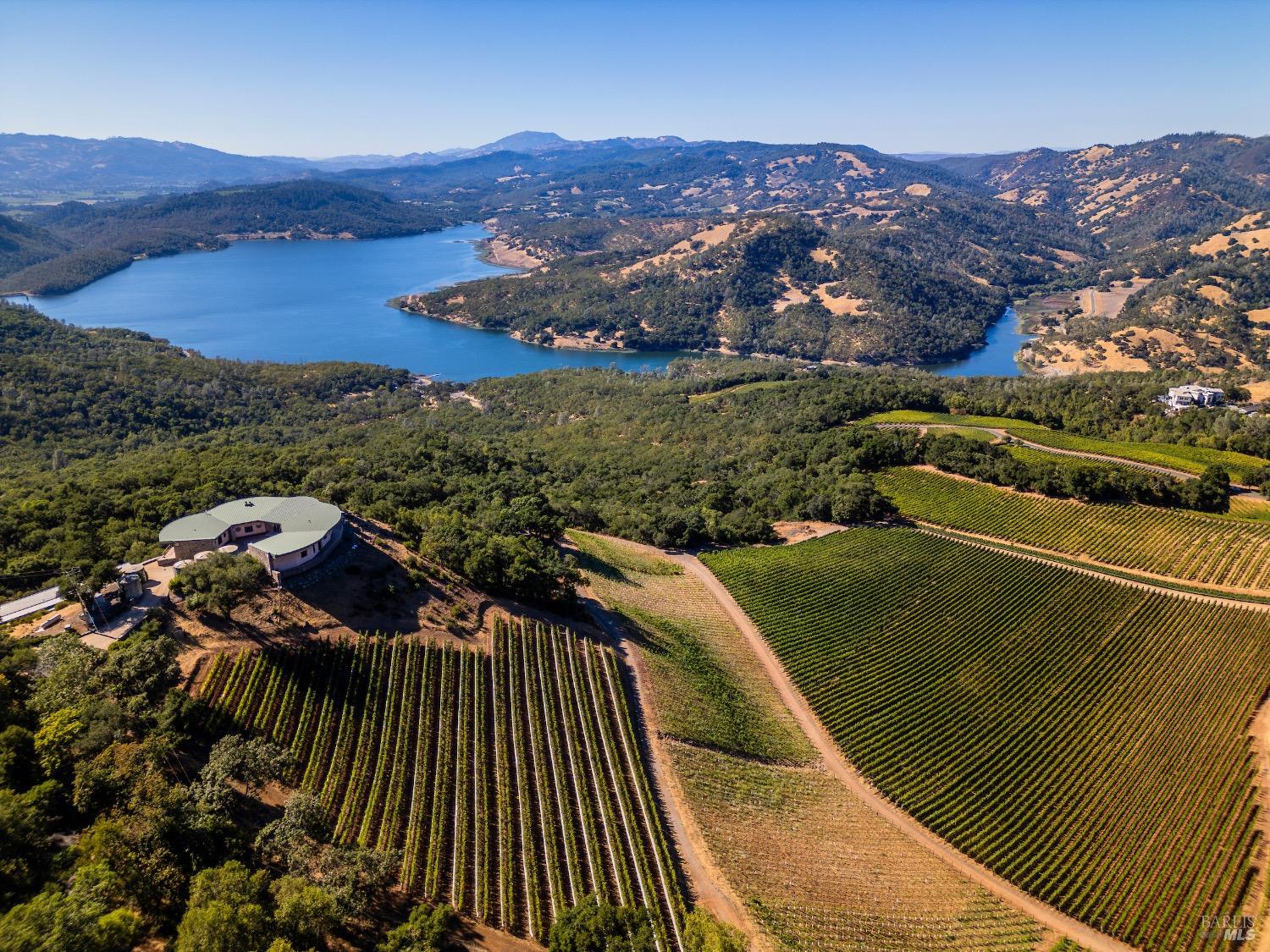
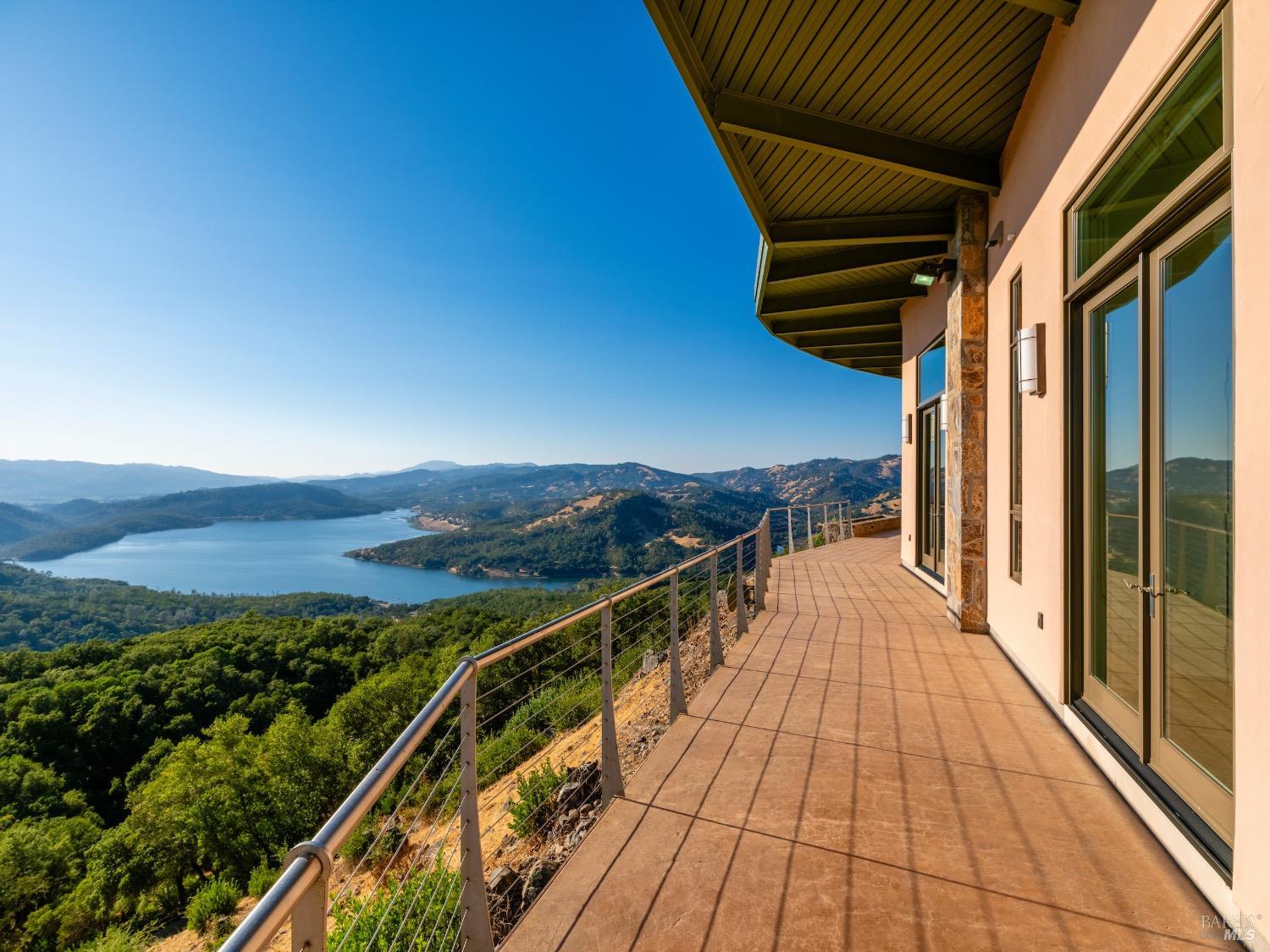
From these elevations, Napa Valley unfolds in a way that is difficult to grasp from below. Lake Hennessey becomes a central feature, its surface reflecting the changing light throughout the day. The valley floor stretches out in the distance, framed by mountains that feel closer, more immediate.
It is a perspective that changes how one thinks about the region.
An Estate Shaped by Its Setting

Within this context, estates on Pritchard Hill are never just individual properties. They are part of a broader narrative shaped by land, history, and a shared philosophy.
Gandona is one such place.
Positioned above Lake Hennessey, the estate occupies a setting that captures many of the defining characteristics of the area. Its vineyards, planted across approximately 18 (+/-) acres within a larger 115-acre holding, are integrated into the hillside rather than imposed upon it. The scale reflects the same restraint seen throughout Pritchard Hill, where each acre is shaped by the realities of the terrain.
The varieties grown here, primarily Cabernet Sauvignon and Cabernet Franc, align with the region’s strengths. These are grapes that respond to the intensity of the site, developing the structure and complexity for which Pritchard Hill has become known.
The built environment follows a similar logic. A winery sized for thoughtful, small-lot production and an extensive cave system carved into the hillside speak to a focus on process and precision rather than volume. There is an emphasis on working with the fruit as it is, allowing the nuances of each block and each vintage to emerge over time.
Gandona Wine Estate
1533 Sage Canyon Rd, St. Helena, CA
Living with the Landscape
What distinguishes Gandona, and properties like it, is not just what they produce, but how they exist within their surroundings. Growing conditions at Gandona are ever more unique from much of Pritchard Hill with its vineyard soils created by ancient landslides, now settled, incorporating diverse organic materials and geological fractures. This allows Gandona to experience both intense Pritchard Hill fruit characteristics with vigor so very rare to mountain sites. The fruit at Gandona is managed with intention and in harmony with the land and the winemaker.
The main residence, positioned on a high elevation bench, set along a ridgeline, is oriented toward the landscape intentionally as in a way that feels almost observational. Large openings frame panoramic views of the lake and surrounding hills emerge, while the materials echo the textures of the terrain itself.
Life here is shaped by the rhythms of the environment. Mornings arrive with clarity, the light spreading across the hillsides. Afternoons bring warmth and stillness. Evenings stretch into long, gradual transitions as the sun sets behind the mountains, casting a shifting palette of color across the valley.
It is a place that encourages attention.
An Ongoing Story
Pritchard Hill has never been static. Its identity continues to evolve, shaped by those who choose to work its land and live within its constraints.
And yet, certain things remain constant. The elevation. The soils. The terroir. The sense of separation from the valley below. The understanding that what is created here takes time.
Gandona exists within that continuum. Not as a statement, but as part of a larger conversation about what Napa Valley is, and what it can be when the focus prioritizes shifts from expansion to expression.
In a region often defined by visibility and access, Pritchard Hill remains something else entirely.
A place that rewards those willing to look a little deeper.
Categories
Recent Posts